Chicago, often referred to as the “Windy City,” conjures images of brisk breezes off Lake Michigan and a cityscape dominated by towering skyscrapers. However, the nickname has a fascinating origin that goes beyond the city’s weather patterns. In this blog post, we’ll unravel the story behind why Chicago came to be known as the “Windy City” and explore how this label became a symbol of civic pride.
Chicago, the city of architectural marvels and cultural diversity, offers visitors a unique opportunity to step back in time and experience the grandeur of maritime history. One such enchanting journey awaits aboard Tall Ship Windy, a majestic vessel that sails the waters of Lake Michigan. Join us as we embark on a virtual voyage below, exploring the charm and allure of this iconic tall ship and the rich history it carries.
As the Windy City transforms into a winter wonderland, Chicago locals and visitors alike have the opportunity to experience the city’s unique charm in a whole new light. From glittering lights along the Magnificent Mile to cozy indoor escapes, Chicago offers a plethora of activities to make the most of the winter season. Let’s explore the enchanting possibilities that await you in the heart of winter.
Few things evoke a sense of wonder and celebration like fireworks lighting up the night sky. Now, imagine experiencing this breathtaking spectacle against the backdrop of the world-famous Chicago skyline, all while aboard the majestic Tall Ship Windy. In this blog, we’ll embark on a journey that explores the magic of viewing fireworks from this iconic vessel in the heart of Chicago.
Chicago, a city known for its magnificent skyline, rich history and stunning lakefront, offers a unique experience that combines all of these elements in a truly memorable way. Aboard Tall Ship Windy, visitors will embark on a voyage that takes them back in time while enjoying the modern marvel that is Chicago’s skyline. In this blog, we’ll explore the captivating world of boat cruises on Tall Ship Windy in the Windy City.
When you think of iconic city skylines, few can rival the breathtaking panorama of the Chicago skyline. Nestled along the southwestern shores of Lake Michigan, this architectural marvel is a testament to human ingenuity, ambition, and the relentless pursuit of the sky. In this blog, we will explore what makes the Chicago skyline an unparalleled work of art.
Lake Michigan, one of the Great Lakes of North America, holds a special place in the hearts of millions. Stretching over 22,400 square miles, it ranks as the second-largest of the five Great Lakes and is renowned for its stunning beauty, diverse ecosystems and rich cultural history. In this blog, we will explore what makes Lake Michigan such a remarkable natural wonder.
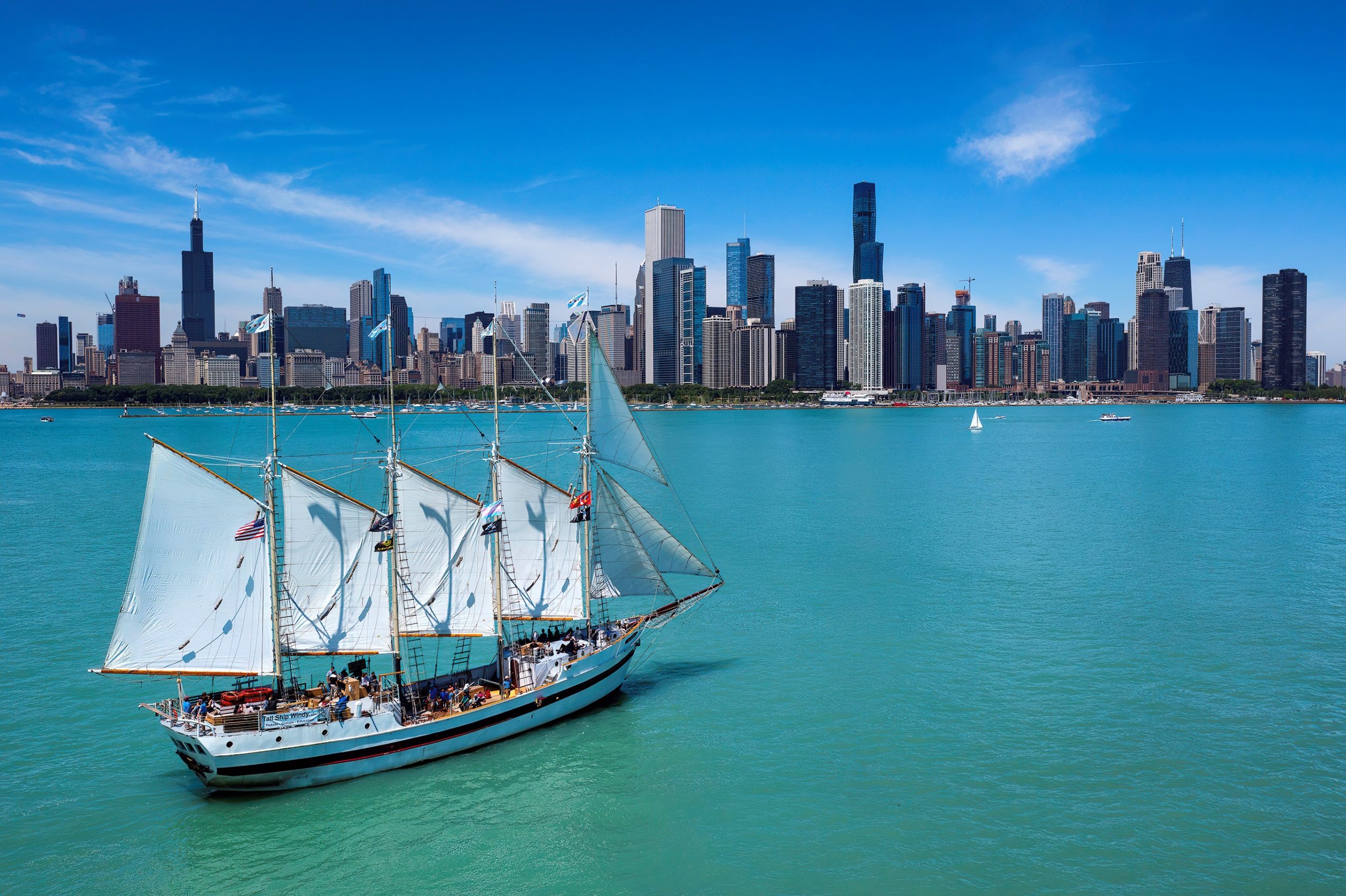
Tall Ship Windy sailing on Lake Michigan in front of the Chicago skyline
A Natural Beauty
Lake Michigan’s sheer size is awe-inspiring. It spans four states: Illinois, Indiana, Michigan, and Wisconsin. Its crystal-clear waters are framed by sandy beaches, rugged coastlines, and lush forests, making it a haven for nature enthusiasts and adventure seekers alike.
Recreation and Leisure
Lake Michigan’s vast shoreline offers an abundance of recreational opportunities. From swimming and sunbathing on its sandy beaches to boating, kayaking, and fishing, there’s something for everyone. The lake’s cool, refreshing waters provide an ideal escape from the summer heat.
Chicago, often referred to as the “Windy City,” boasts a stunning lakeside skyline and a beautiful waterfront park system. Millennium Park and Navy Pier, where you’ll find Tall Ship Windy docked from May through September, are just two of the many attractions that draw residents and tourists to the shores of Lake Michigan.
Biodiversity and Conservation
Beneath Lake Michigan’s surface lies a thriving ecosystem. The lake is home to a diverse range of fish species, including salmon, trout, and whitefish. Commercial and recreational fishing on Lake Michigan is a significant industry and has a rich history, with charter boats and anglers seeking the thrill of the catch.
Conservation efforts are vital to preserving this natural wonder. Organizations and government agencies work tirelessly to combat invasive species like the zebra mussel and protect native species. The health of Lake Michigan is not only essential for the environment but also for the countless communities that rely on it for drinking water and livelihoods.
Cultural Significance
Lake Michigan has deep cultural significance for the communities that surround it. Native American tribes, such as the Ojibwa and Potawatomi, have lived along its shores for centuries. The lake has also played a pivotal role in the history of trade and transportation in the Midwest, serving as a vital route for early explorers and settlers.
The maritime heritage of Lake Michigan is celebrated in numerous museums and historic sites, including the Michigan Maritime Museum in South Haven and the Wisconsin Maritime Museum in Manitowoc. These institutions showcase the lake’s role in the development of the region and the nation.
A great way to learn more and immerse yourself in maritime history and storytelling, all while also taking an active part in sailing a 148-foot, traditional four-masted gaff topsail schooner, is to book an Educational Sail aboard Chicago’s Tall Ship Windy.
Sunsets and Serenity
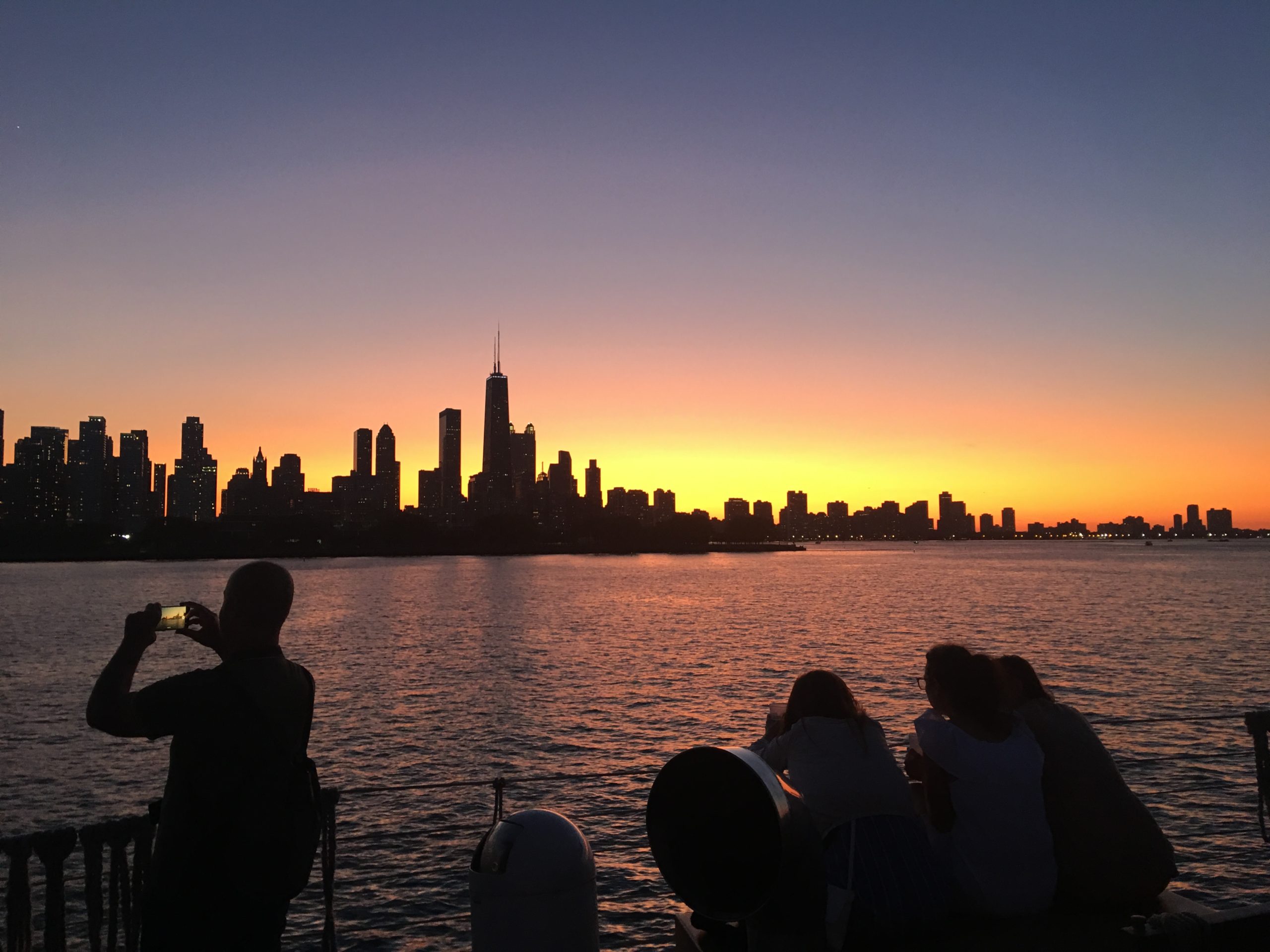
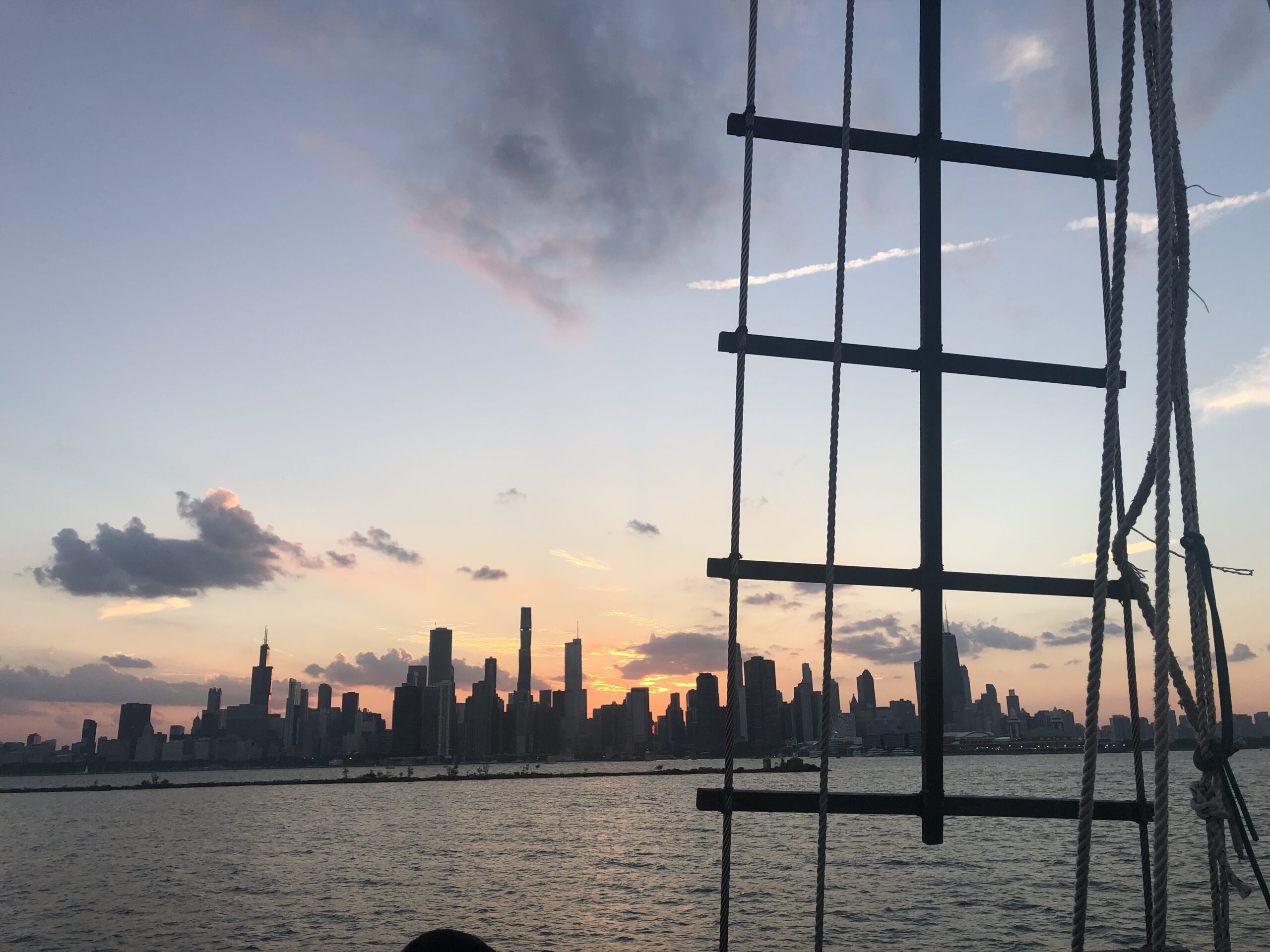
Perhaps one of the most captivating aspects of Lake Michigan is its sunsets. The lake’s vast expanse provides a perfect canvas for nature’s daily masterpiece. The sky is painted with hues of pink, orange, and purple, reflecting off the calm waters. It’s a sight that never grows old and leaves visitors in a state of tranquil awe.
To enjoy awe-inspiring views as the sun sets over the world-famous Chicago skyline, join us aboard Tall Ship Windy for a Skyline Sunset Sail.
The Great Lakes have a rich history of shipwrecks, storms, and tales of adventures. Among the more colorful chapters of this history are the legends and stories surrounding pirates of Lake Michigan. While the Caribbean is commonly associated with the swashbuckling pirates of yore, the fresh waters of Lake Michigan have their own tales of plunder and treachery.
In the late 19th and early 20th centuries, Lake Michigan saw a boom in shipping and commerce. Lumber, grains, and other goods were shipped across its waters. This surge in shipping naturally attracted those who saw opportunity in less-than-honorable pursuits.
One of the most infamous pirates on Lake Michigan was “Roaring” Dan Seavey. Seavey was unlike the stereotypical pirates of the ocean; he was a former sailor and fisherman who turned to piracy in the early 1900s. His reasons for turning rogue are varied. Some say it was due to economic hardship, while others believe it was simply the thrill of lawlessness.
Seavey’s tactics were quite ingenious. He would light lanterns on the shoreline to confuse ships and make them believe they were approaching a safe harbor. When the ships ran aground due to these deceptive lights, Seavey and his crew would plunder their cargo. His reign of terror was so well-known that many stories attribute various shipwrecks and disappearances on the lake to him, even if there’s no evidence of his involvement.
Another tale involves James Jesse Strang, the self-proclaimed “King of Beaver Island.” While not a pirate in the traditional sense, Strang was a charismatic leader of a breakaway Mormon faction. He declared himself king of Beaver Island in Lake Michigan and established a rather autocratic rule. Under his leadership, there were whispers of piracy, as the island’s residents were often accused of raiding passing ships and harboring stolen goods.
As with any good legends, the line between fact and fiction often blurs. There’s the tale of the “Lake Michigan Triangle,” a region in the lake known for mysterious disappearances of ships, reminiscent of the Bermuda Triangle. Some attribute these disappearances to natural phenomena, while others believe pirates used the triangle as a cover for their dastardly deeds.
Besides these notable characters, stories abound of hidden treasures buried along the shores of the lake. Legends tell of pirates burying their loot on remote islands or secluded beaches, waiting for a time when it’s safe to return. These stories have led many an adventurer to search for the hidden treasures of Lake Michigan.
Despite the legends and lore, it’s essential to remember that Lake Michigan’s “pirates” operated in a very different context than their Caribbean counterparts. The vastness of the Great Lakes, combined with the many ports, hiding spots, and secluded coves, made it a haven for those seeking to escape the law or turn a quick profit.
In the end, while Lake Michigan might not have seen the likes of Blackbeard or Captain Kidd, its pirate tales are a fascinating chapter in the region’s history. These stories remind us that the allure of piracy, with its promise of quick riches and a life outside the law, is not confined to the high seas. The freshwater expanses of the Great Lakes have their own legends, filled with characters and tales that continue to captivate and intrigue.
Cherry blossom season is a springtime rite of passage in Japan. Each year, both locals and tourists alike pour into city parks to post up with picnic blankets and admire the pale pink flowers—a tradition called hanami, or flower viewing—before they fall to the ground after just a few short days. Here in the U.S., Washington, D.C. is the most well-known destination for cherry blossom viewing (it was famously gifted more than 3,000 cherry trees by Japan in 1912), but you’ll still find plenty of good spots for gazing at gorgeous spring blooms in and around Chicago. Jostle with crowds at one of the most beautiful gardens in Chicago, take a train to the suburbs or pack your bags for a flower-powered day trip from Chicago. Just make sure to plan your visit carefully, because you only have a few days to soak it all in once the blooms hit their peak! Here are some of the best places to see cherry blossoms in Chicago.
When do cherry blossoms bloom in Chicago?
Cherry blossoms hit their peak anywhere from late March to early May, depending on weather conditions.
How long do cherry blossoms last in Chicago?
Once the flowers hit peak bloom, they typically last anywhere from three to eight days before shedding their petals.
The best places to see cherry blossoms near Chicago
Take in views of Yoshino, Gooseberry, Snow Goose, Snow Fountains and Accolade blooms just south of the Museum of Science and Industry along Jackson Park’s Columbia Basin, an area home to more than 160 cherry blossom trees. The pink and white trees—which were planted beginning in 2013 to commemorate the 120th anniversary of the World’s Columbian Exhibition—draw thousands of visitors to the park each year, but don’t let the crowds scare you off: You won’t find a better place in Chicago to have a true hanami experience. If you’re especially enthusiastic, you can even pick up cherry blossom-themed merch from the Chicago Park District’s website.
Lincoln Park Zoo’s new lion cubs make their public debut, April 14, 2023. (Courtesy Lincoln Park Zoo)
These cubs sure know how to make an entrance.
On Friday, Lincoln Park Zoo’s three new male African lion cubs greeted the public in their outdoor habitat for the first time since they were born Jan. 9. The energetic trio scampered, nuzzled, frolicked and at times tested the patience of mom Zari just like all youngsters.
The debut took place during a special event for zoo members and the press, with the cubs expected to have regular access to the exhibit if they choose beginning April 15. Members of the lion pride make their own decisions about where to spend their time, zoo officials said.
Up to this point, the cubs — Pesho (pe-sho), Sidai (see-dye) and Lomelok (low-mey-lock) — have been bonding behind the scenes with Zari.
The three “have surpassed many critical milestones including nursing, opening their eyes, their first vet exam and meeting the rest of the lion pride, to name a few,” Maureen Leahy, vice president of animal care and horticulture at the zoo, said in a statement. “We are so excited to watch them continue to grow, discover the habitat and see their individual personalities shine through.”
The new cubs join big brother Pilipili, who was born to Zari and partner Jabari in March 2022 (gestation for lions is roughly 110 days).
Lion populations have declined for the past 100 years, with fewer than 20,000 remaining. Lincoln Park Zoo is a partner of the KopeLion Project based in the Ngorongoro Conservation Area in northern Tanzania.




 te ingenious. He would light lanterns on the shoreline to confuse ships and make them believe they were approaching a safe harbor. When the ships ran aground due to these deceptive lights, Seavey and his crew would plunder their cargo. His reign of terror was so well-known that many stories attribute various shipwrecks and disappearances on the lake to him, even if there’s no evidence of his involvement.
 stories abound of hidden treasures buried along the shores of the lake. Legends tell of pirates burying their loot on remote islands or secluded beaches, waiting for a time when it’s safe to return. These stories have led many an adventurer to search for the hidden treasures of Lake Michigan.